

Ten Days Together
- Dominic Abaria

- 3 days ago
- 6 min read
We know what the disciples were doing in those ten days between the Ascension and Pentecost. Luke tells us they were huddled together in an upper room, praying, waiting, bewildered but obedient. A hundred and twenty of them, watching the door, watching the sky, watching each other. Waiting for something Jesus called "the promise of the Father" without quite knowing what that meant.
But I have spent years turning a different question over in my mind. In doctoral seminars, in quiet rooms with directees, in my own long stretches of prayer, the question surfaces again and again. We know what the disciples were doing in those ten days.
What was heaven doing?
I want to muse on that. Carefully, reverently, but imaginatively. Because the Scriptures give us enough to work with, and the tradition gives us categories to think with, and sanctified imagination has always been a legitimate tool of the theological mind.
So let me take you there. Or at least, let me try.
Something Had Never Happened Before
Before we get to the celebration, we need to sit with something staggering. When Jesus ascended into heaven, something arrived there that had never been there before.
Think about that slowly.
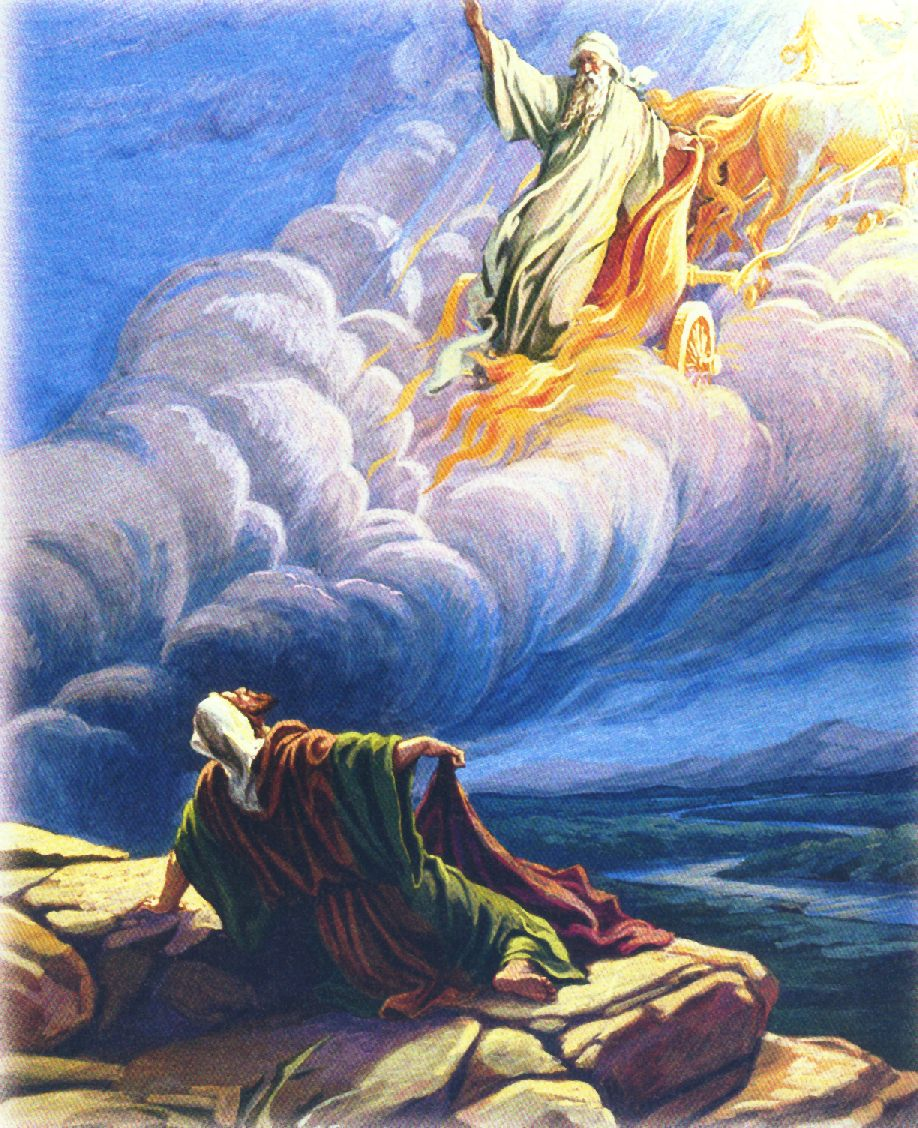
Elijah went to heaven in a chariot of fire. He has been there, in his body, for nearly three thousand years. Enoch walked with God and was not, because God took him. Wherever Enoch is, he is there in the flesh. These two men are the stunning exceptions in all of human history, the anomalies that make theologians nervous and children wide-eyed.
But Jesus is something else entirely.
Elijah went up in his mortal body. Enoch was taken before death came for him. But Jesus arrived in heaven having passed through death and out the other side. He came bearing a resurrection body, a glorified body, the firstfruits of an entirely new kind of existence. He came with wounds that had become glorious rather than terrible. He came as the eternal Son of God who is also, permanently and irreversibly, the Son of Man.
Human flesh, in its redeemed and glorified form, entered the heavenly realm for the first time in the history of everything.
I think heaven noticed.
The Welcome
I imagine the Father watching the Ascension the way a parent watches a child come through the door after a very long and very hard journey. Not with surprise, because the Father knows all things. But with something that can only be called joy. The kind of joy that has been held in tension for a long time, that finally gets to be released.

The Son is home.
And I think the Father speaks first. Not with a theological proposition, but with the kind of words that have been waiting to be said. Something like: "Well done. Well done, my beloved. You finished it. Every last bit of it."
And perhaps the Son, still bearing the marks in his hands, simply holds them out. Not as evidence. Not as argument. As gift. As if to say, "Look what I brought back with me."
Because he did not come back empty handed. He came back carrying humanity. He came back as our Great High Priest, having offered himself once for all, now appearing in the presence of the Father on our behalf. The wounds are not a tragedy anymore. They are the most beautiful thing in the universe.
I do not think that reunion was quiet or formal or composed. I think it shook the foundations of heaven the way nothing ever had before.
And What Did the Spirit Say?
This is where it gets wonderfully difficult to put into words, because the Spirit is not a silent observer in the Trinitarian life. He is not a third wheel. He is the bond of love between Father and Son, the one who has hovered and brooded and moved and breathed across the whole of redemptive history.
The Spirit was there at the Jordan when the Son was baptized and the Father said "this is my beloved Son." He was there in the wilderness, leading Jesus through forty days of testing. He was there at Gethsemane, and at the cross, and at the resurrection, that great act of raising the Son from the dead.
He has seen everything.
So I like to imagine the Spirit in those ten days with the particular delight of someone who has been in on a secret for a very long time and has finally watched it come to full bloom. Not gloating, exactly. More like deep, radiant satisfaction.
If the relationship within the Trinity has any texture of warmth and personality to it, and I believe it does, then I suspect the Spirit brought something playful into those ten days. Perhaps something like: "I told you! I was there when you breathed the promise into the prophets. I have been waiting on this for centuries." And perhaps the Father laughed... The deep, full laughter of someone who knows that joy shared is joy multiplied.
The theologians are right that the inner life of God exceeds our categories. But they have sometimes given us the impression that the Trinity is formal, distant, composed. The Scriptures suggest something far warmer. The Father sings over his people with joy. The Son is the radiance of the Father's glory. The Spirit intercedes with groans too deep for words. This is not a committee.
This is a communion.
Ten Days and the Fullness of Completion
It is worth pausing on the number itself. Ten days. In the Jewish imagination, ten carried the weight of fullness and completion. Ten commandments. Ten plagues. The ten days between Rosh Hashanah and Yom Kippur, days set apart for holy examination and return. Ten was not accidental in the Hebrew imagination. It meant something was being finished, sealed, brought to its proper end.
So I wonder if those ten days were, in some sense, a holy pause in the heavenly realm. A Sabbath of sorts after the greatest work ever accomplished. A moment for the Trinity to simply be together, to savor what had been done, to delight in each other before the next great movement began.

The Son had completed his earthly mission. The age of the Spirit was about to begin. And in between, there were ten days to breathe it all in. Ten days of the Father rejoicing over the Son. Ten days of the Son interceding for the ones he was about to leave behind. Ten days of the Spirit standing at the threshold of the most comprehensive mission in history, ready to be sent.
Not idle. Never idle. But savoring.
Flesh and Blood in the Throne Room
This is the detail I cannot stop thinking about. The writer of Hebrews tells us that Jesus entered the heavenly sanctuary itself, appearing in the presence of God on our behalf. The great high priest, passing through the heavens, has sat down.
And he did it in a body.
Elijah is there in a body. Enoch is there in a body. But now the one through whom all things were made is there in a body too. A human body. Our kind of body, pressed through resurrection into something that death can never touch again.

What does that mean for us?
It means that humanity is no longer merely a project God is working on from a distance. It means that God, in the person of the Son, has gathered our nature into himself and carried it all the way home. When the Father looks at the Son, he sees human flesh in the throne room. He sees the stuff of dust and breath seated at his right hand. He sees the future of every person who will ever trust in the name of Jesus.
That is not theology I can be cool and academic about. That is theology that should make us put the book down and sit quietly for a while.
The Fire Is Coming
And so on the tenth day, the Spirit moves. Not reluctantly, but with full and overflowing joy. The Son had said it plainly: "If I do not go away, the Helper will not come to you. But if I go, I will send him to you." The sending of the Spirit is tied to the return of the Son. The mission is not abandoned. It is expanded. The one who was with the disciples is now going to be in them.
Those ten days in heaven were not a delay. They were the deep breath before the great exhale.
A Selah.
And in an upper room below, a hundred and twenty people were praying without knowing quite what they were praying toward. Their prayers were rising into a heaven that was fully, gloriously alive with Trinitarian celebration and completion and commissioning.
Do not mistake the silence for stillness. Heaven is not quiet. The Trinity is never idle. Somewhere above the ceiling of your waiting, love is moving, and it is moving toward you.
The flesh and blood of Jesus is in the throne room.
The fire is coming.



Comments