

Lent: The Holy Practice of Subtraction

The physical sensation is always grittier than I expect.
Every year on Ash Wednesday, I walk toward the front of the sanctuary and join the line of the faithful. I stand before a minister and close my eyes. I feel a thumb dip into a bowl of burnt palm branches mixed with oil. Then I feel the pressure of the cross being traced onto my forehead. It is not a polite smudge. It is a dark and jarring mark. I hear the words that our modern culture is terrified to whisper to one another.
“Remember that you are dust, and to dust you shall return.”

I walk back to my seat, and for the rest of the day, I catch glimpses of that black mark in mirrors and windows. It stops me in my tracks every time. It serves as a holy interruption to my routine. It is a physical reminder that no matter my titles or my schedule or my plans, I am mortal. I am fragile. I am in desperate need of a Savior.
As a pastor and spiritual director, I sit across from people every week who are exhausted. We are a people drowning in noise. We are addicted to comfort. We are spiritually atrophied. We run at a frantic pace toward things that will burn up in the end, and we ignore the One who is the very source of our breath. This is why I am convinced that we do not just need Lent. We are in a spiritual emergency without it.
We are about to enter the most sacred disruption of the Church calendar. However, before we talk about what we are giving up, we have to talk about why we are going into the wild.
The Ancient Path
To understand Lent, we have to stop treating it like a modern personal improvement challenge or a second attempt at New Year resolutions. This is not about diet culture or productivity hacks. This is about death and resurrection.
The roots of this practice go deep. They anchor us in the rich soil of the Apostolic age. By the time of the Council of Nicea in 325 AD, the church had formally recognized a period of forty days known as "Quadragesima" as a time of intense preparation for Easter. Historically, this was the final gauntlet for catechumens. These were the new believers preparing to be baptized at the Easter Vigil. But the rest of the church joined them because they recognized their own wandering hearts.
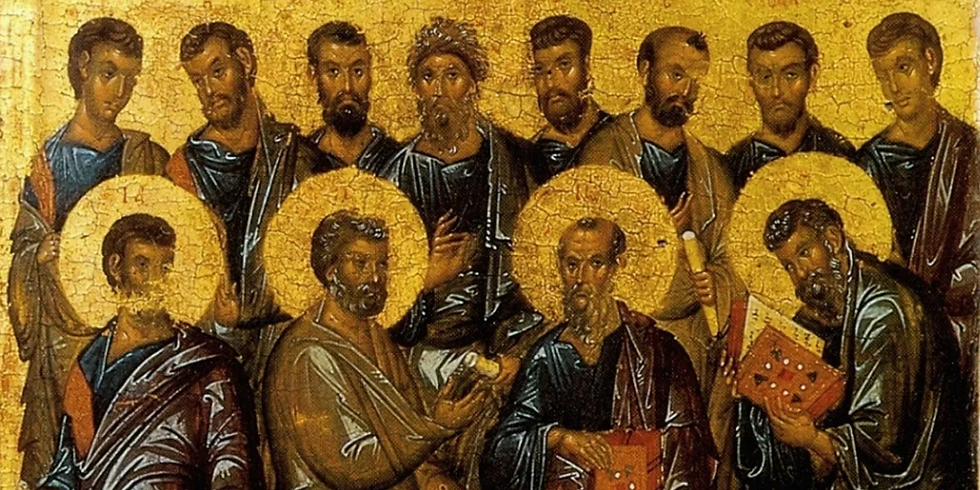
They looked back to the patterns of Scripture. They saw the forty days and nights rain fell on Noah to cleanse the earth. They saw the forty years Israel wandered in the wilderness to learn reliance on God. Most importantly, they saw the forty days Jesus spent fasting in the desert before launching His ministry.
For centuries, Christians have viewed this season not as a burden but as a gift. It is a tithe of our year given wholly to God to realign our hearts. It is a time when the Church collectively decides to stop playing games. We choose to walk the Via Dolorosa, the Way of Suffering, toward the Cross.
The Formation of Subtraction
This brings us to the crisis of our current moment. If we are honest, our lives are defined by addition.
We are conditioned to believe that the solution to every problem is more, especially in the West. If you feel empty, you add a hobby. If you feel lonely, you add a social app. If you feel insecure, you add an accolade to your resume. We add noise to our silence. We add sugar to our diet. We add clutter to our homes. We stuff our souls with entertainment and distraction until we are spiritually bloated and lethargic. We are full to the brim, yet we are starving.
We are terrified of the empty spaces in our lives because we do not know who we are without our props. We build layer upon layer of addition to protect ourselves from the silence where God speaks.
But the wilderness operates on a completely different physics. The wilderness teaches by subtraction.
In Matthew 4, we read that Jesus was led up by the Spirit into the wilderness. The Spirit did not lead Him to a banquet. He led Him to a place of lack. In the desert, there is no food. There is no applause. There is no distraction. The wilderness strips you bare.

God has always used the wilderness to strip His people of their false supports. When Israel was in the desert, God took away the leeks and melons of Egypt so they would learn to hunger for Manna. He subtracted their slavery so they could learn sonship. He removed their idols so they could see the cloud by day and the fire by night.
In my work as a spiritual director, I see a terrifying trend. We want the resurrection power of Jesus without the wilderness subtraction of Jesus. We want the victory without the emptying. But here is the hard truth. You cannot be filled with the Spirit if you are already full of yourself.
Lent is our voluntary entry into the holy work of subtraction. It is a deliberate choice to remove the crutches we lean on. We remove food and media and noise and comfort so that we fall into the arms of God. We subtract the world so we can see Jesus clearly. When the noise stops, what do you hear? When the stomach growls, what do you truly hunger for? When the phone is off, whose approval do you seek?
A Call to Practice
So how do we participate in this subtraction today? How do we walk this out in a way that is not just religious performance art?
If you are just giving up chocolate to lose a few pounds, you have missed the point entirely. If you are giving up social media just to get more work done, you have missed the point. We empty ourselves of these things so that we can be filled with Him. As we walk toward the Cross this season, I want to invite you into three specific practices of subtraction that have anchored the faithful for two thousand years.
1. Silence as the Subtraction of Noise
We are terrified of silence because in the silence we have to face ourselves. We plug our ears with podcasts and music and streaming services from the moment we wake up until we crash at night. We drown out our own thoughts because we are afraid of what they might say.
This Lent, I challenge you to turn it off. Subtract the soundtrack of your life. Drive to work in silence. Do the dishes in silence. Sit in your car for ten minutes before you walk into your house. In the silence, the sediment of your soul begins to settle. The Apostolic Fathers taught that silence is the language of the age to come. It is in the quiet that the still and small voice of God becomes a roar. If you want to know Jesus, you must stop drowning Him out.
2. Solitude as the Subtraction of Audience
Solitude is different from isolation. Isolation is running away from people while solitude is running toward God. Jesus frequently withdrew to lonely places to pray. If the Son of God needed to pull away from the demands of ministry to be with the Father, who are we to think we can burn the candle at both ends?
Subtract the crowd. Find a place where no one can find you. Leave your phone in the other room. Better yet, turn it off completely. In solitude, we learn that we are not defined by what we do. We are not defined by who we know. We are not defined by what we produce. We are defined by the fact that we are known and loved by the King. We practice solitude to remember that we are children of God rather than employees of the world.
3. Stillness as the Subtraction of Striving
Psalm 46 commands us to be still and know that He is God. The Hebrew implies a ceasing of striving. It literally means to drop your hands. It means to stop fighting for control.
In our culture, stillness looks like laziness. In the Kingdom, stillness is an act of war against the idol of self reliance. This Lent, practice the discipline of doing nothing but sitting in His presence. No agenda. No prayer list. Just you and the Holy One. It will feel uncomfortable at first. You will feel the urge to get up and do something. Resist it. Stay there until you realize that He is God and you are not.
The Road to Jerusalem
Friends, I say this with all the urgency in my heart. Do not waste this season.

We are walking toward Jerusalem. We are walking toward the upper room and the garden of Gethsemane. We are walking toward the trial and the beating and the wood of the Cross. We are walking toward the murder of the Son of God for the sake of our wretched souls.
Let us not arrive at Good Friday distracted. Let us not arrive full of the world. Let us not arrive bored with the Gospel and numb to the horror and the glory of the crucifixion.
Let us enter the wilderness. Let us embrace the subtraction. Let us pursue silence and solitude and stillness. We do not do this to earn the love of God. We do it because we are desperate to know the One who loved us enough to die for us.
The days are lengthening. The light is coming. But first, we must walk through the dark to deeply appreciate the light.
Will you walk with me?


Comments