

How Can This Be?
- wendyfermata
- Mar 16
- 5 min read

Updated: Mar 16
Our blog today was written by high school senior Paul Bangsund.
I invite you to walk with me alongside one of Jesus’ disciples. One who went through some of the highest highs and the lowest lows. Walk with him, walk with me, and walk with Jesus, towards Jerusalem.
Simon is listed first in the calling of the disciples in Matthew, Mark, and Luke. Furthermore, Jesus actually gives him the name Peter. “Jesus looked at him and said, ‘You are Simon son of John. You will be called Cephas.’ (which, when translated, is Peter).”(John 1:42) I wonder what that might have been like, for the Messiah to look you up and down and then give you a new name. I wonder if Peter took pride in his new name, and if the other disciples ever tired of hearing it.
There are many reasons why Peter stands out from the other disciples. When Jesus asks his disciples who people say He is, they reply in a noncommittal manner. “Some say John the Baptist; others say Elijah; and still others, Jeremiah or one of the prophets.”(Matthew 16:14) When Jesus presses them further, it is Peter who responds: “You are the Messiah, the Son of the living God.”(Matthew 16:16) I wonder what went through Peter’s mind at this moment. Did he blurt out his answer as soon as Jesus asked the question? Or was there perhaps a moment of awkward silence as the disciples looked at their sandals? Were they perhaps afraid of being wrong? Or maybe even afraid of being right?

The Imitation of Christ
Caesarea Philippi, where Peter confessed Jesus to be the Son of God
Either way, Jesus makes it clear that Peter’s confession does not originate with Peter, but has actually been revealed to him by the Father. Peter is more of a recipient than an active agent in this situation. He receives even more as Jesus says, “I will give you the keys to the kingdom of heaven; whatever you bind on earth will be bound in heaven, and whatever you loose on earth will be loosed in heaven.”(Matthew 16:19) I wonder if this was confusing or overwhelming at the time. I wonder if Peter ever subsequently remembered those words and felt a burden of responsibility.
Peter is lifted up by Jesus, and also humbled by him. He walks out on the water towards his Lord, but then sees the wind and doubts. Jesus catches him, and reproves him. Peter gets some things right, but he also drops the ball, sometimes in pretty embarrassing and humbling ways.
After confessing Jesus as the Son of God, Peter rebukes Jesus for predicting his coming death. “Peter took him aside and began to rebuke him. ‘Never, Lord!’ he said. ‘This must never happen to you!’”(Matthew 16:22) Jesus responds with “Get behind me, Satan!” and calls Peter a stumbling block. I wonder if blood rose to Peter’s face at these words. Did an angry retort spring up in his heart, or was he shocked into silence? In this moment Jesus uses Peter as an example to the rest of the disciples of what not to do, as He tells them that in order to follow Him, they must deny themselves and take up their cross. What must it have felt like to be given the keys to the kingdom of heaven, and then to face such a crushing rebuke? I wonder if Peter ever felt like maybe he had messed up too badly or too much. I wonder if he ever thought of Jesus’ love and favor as things that could be lost. Or maybe, just maybe, Peter realized that each rebuke and correction he received were testaments to the grace that was being focused on him.
Have you ever stopped and taken a moment to see yourself primarily as a recipient of the love and favor of your Lord? As an object of compassion and care, who can be both comforted and corrected by the same love that calls you by name?
I have been reprimanded for messing up, sometimes in the presence of friends. It’s rough to realize that you are the one in the wrong. However, the sooner you realize that it is love you are receiving, and that the desire of the one who rebuked you is for reconciliation, not isolation, the sooner you are able to accept the grace being offered to you.
I wonder if Peter ever spent a day or so sulking in embarrassment over his recent public correction. I wonder if during those times he found it hard to meet the other disciple’s eyes. Maybe he felt like they were judging him.
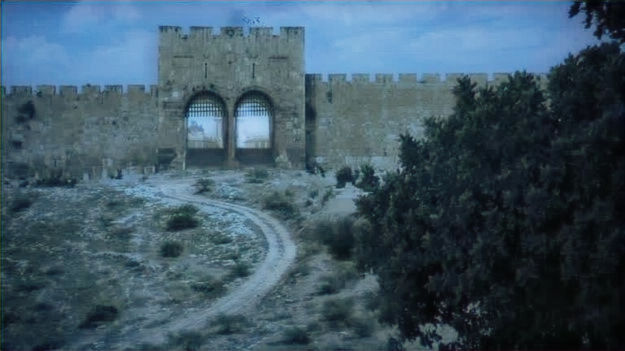
As Jesus draws nearer to the cross, and the shadow of the Golgotha looms, Peter’s story grows darker too. When the soldiers come to arrest Jesus, Peter steps forward. He takes things into his hands once more. Once again Peter says, “This must never happen to you, Lord!” Only this time he speaks with his sword. And once more, Jesus corrects him with the same gentle grace. “No, Peter, this is not the way.” Not only that, Jesus actually undoes the harm Peter has inflicted. The disciples flee. Perhaps Peter fled with cheeks burning and mind reeling. Perhaps this was one rebuke too many for him. To step out in full confidence that he was being a hero for Jesus, and then to immediately be told that he had gotten it backwards - that he had messed up in such a visceral way. I wonder if he found it difficult to even accept that he had made a mistake he thought he would never find himself making.
Which brings us to the darkest part of Peter’s story: The Denial. A mistake so heavy that Jesus foreshadows its coming. Peter literally promises that he will never make this mistake. He emphatically claims that even if the rest of the disciples desert Jesus, he never will. Clearly he thought such a thing was impossible.
And yet, it happens.
For Peter, Good Friday plays out like the final crescendo of a tragic song that has encompassed his entire life with Jesus. His past mistakes are only the opening notes. The cello begins its soft but terrible undertone when Jesus says: “You will disown me three times.” The rumbling tones grow audible as Peter flees down the hill away from the Garden, and in the courtyard they begin to build.
First, “You were with Jesus of Galilee, weren’t you?”
“I don’t know what you’re talking about.”
Louder.
Next, “This man was with Jesus of Nazareth.”
“I promise you, I do not know the man!”
And Louder.
Finally, “Surely you are one of them; your accent gives you away.”
“I swear to you, I do not know the man!”
And then, at the height of the song, the music dies away and the rooster crows.
Peter is broken. He has done what he promised he would never do. Good Friday holds nothing more for him. He weeps.
I invite you to sit with Peter outside the courtyard. I invite you to imagine how he felt. The ultimate rebuke, the greatest humiliation, had not come from his Lord’s lips but from the throat of a bird.
Feel the dust on your feet, listen to the murmur of people from inside, smell the smoke from the fire, and realize that it will be many hours until morning. How many of those hours Peter will spend with his head in hands and tears streaming down his face?
This is not the end of Peter’s story, but it almost certainly felt like the end to him.
Have you ever had a moment that felt like the end? Like the night couldn’t get any darker, and it would never get any brighter?
Weep with Peter, friends, but do not lose hope.
The night ahead is long and dark, but in the morning there will be light.


What a rich reflection on Peter! Thank you for this, Paul!
Really powerful piece. So raw and so comforting at the same time.